

Not everything is frugal! I am sure you have read articles and tips that promote frugal living and give some ideas that are just not frugal! These frugal myths float around and sometimes even cost people a lot of money!
When you are looking to be frugal, remember that some things may work for some people and backfire for others. Just because something works for you doesn’t mean it will work for someone else, and vice versa.
The best idea is to keep an open mind and try new things to see what works for you. The best frugal living tips are the things that work for you!
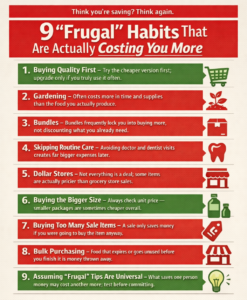
Buying Quality
The popular advice to “buy quality” doesn’t always hold up.
A smarter approach for many people is to buy the cheaper version first. If cheap is just as good, you’re ahead.
If you don’t end up using it as much as you thought, you’re ahead. And if you do use it a lot, you can always replace it with a higher-quality one next time.
Gardening
Gardening is often promoted as a way to cut grocery bills, but for many people, it costs more than the food it produces and takes up a lot of time in the process.
That said, it can be a rewarding hobby, and those who enjoy it can find ways to engage with it frugally.
The key distinction: gardening is not reliably a money-saving strategy, especially not at the beginning.
Bundles
“Bundles are cheaper” is a common assumption, but it doesn’t always hold true. Fast food meal bundles are rarely a deal anymore, and the same can apply to cable/internet packages and travel packages.
Often, all a bundle does is rope you into buying more, not discount both items. Do your research before being persuaded into a bundle, because sometimes it’s just clever marketing designed to make you spend more.
Skipping Routine Care
Forgoing repairs, routine maintenance, and regular checkups at the doctor or dentist may feel like a short-term saving, but it’s a move that will almost certainly cost more in the long run.
This is less a frugal tip and more of a false economy.
Dollar Stores
Dollar stores can be genuinely frugal for some items, such as home décor, for example, but not everything on the shelves is a bargain.
Food is a common example where the prices may be higher than at a standard grocery store on sale.
The right approach is to look at each item critically and ask whether the price is actually a discount or simply overpriced in a convenient package.
Buying the Bigger Size
Bigger packaging doesn’t automatically mean better value.
A simple unit-price comparison often tells a different story. For example, a 32oz product at $4.99 sounds like a deal until you realize two 16oz packages at $1.99 each come out $1 cheaper for the same total amount, and the smaller packages stay fresher longer.
Always check the price per unit before assuming the large size wins.
Buying Too Many Things on Sale
A sale is only frugal if it actually saves you money overall. Spending $50 every week at the mall because individual items are “on sale” adds up quickly and often results in accumulating things you don’t need.
If a sale is causing you to spend more than you otherwise would, it isn’t frugal.
Bulk Purchasing
Buying in bulk doesn’t always save money. It makes sense for things you know you’ll consistently use, such as toilet paper and rice, but for many food items, large quantities can expire, go stale, or simply go unwanted before they’re finished.
Before buying in bulk, ask yourself whether you’ll realistically use all of it.
