
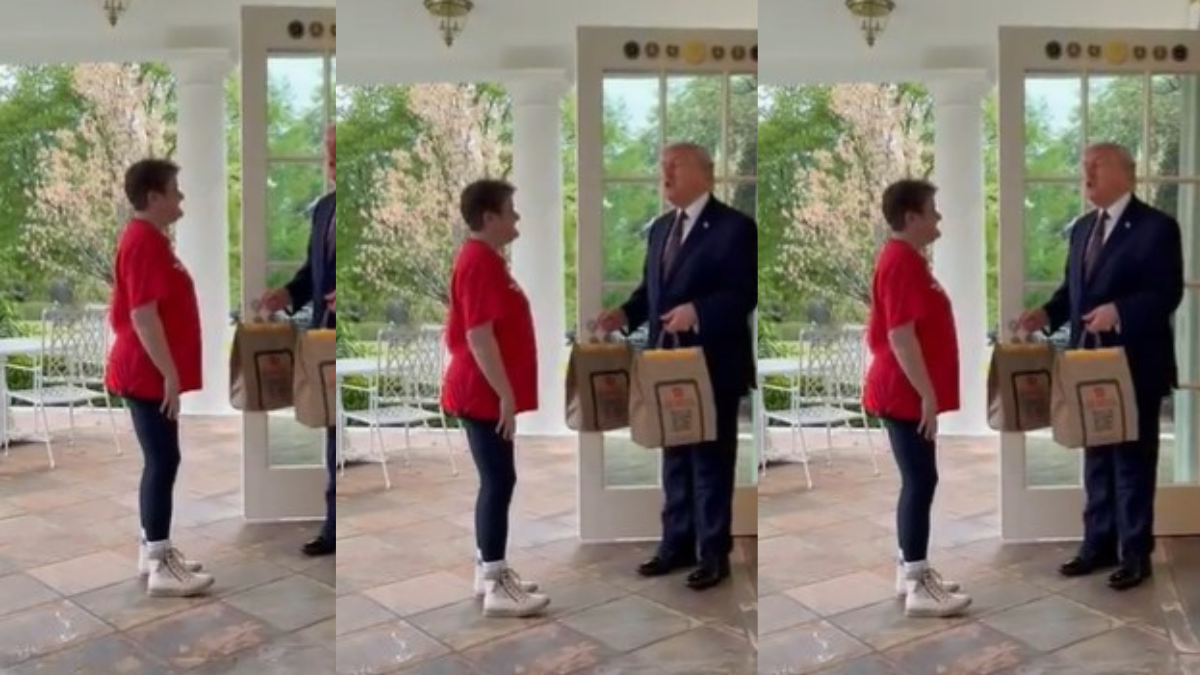
A viral moment at the White House is reigniting debate over one of the Trump administration’s signature economic talking points, and at least one prominent labor advocate says the framing misses the point entirely.
White House Press Secretary Karoline Leavitt recently shared footage of President Trump receiving a McDonald’s delivery at the White House, using the moment to promote the administration’s “no tax on tips” policy as evidence that his economic agenda is putting money back in workers’ pockets. The clip has circulated widely online.
But the viral moment is cutting in a different direction. The so-called “DoorDash grandma”, a phrase that has spread across social media, has drawn attention to a quieter and more troubling reality: older Americans are increasingly turning to gig and tip-dependent work just to make ends meet.
I want to hear your thoughts! Join the conversation on Facebook!
Important Economic Indicator
Saru Jayaraman, president of One Fair Wage, says the two moments together reveal something important about the state of the economy, and neither story is one worth celebrating.
“It’s sad, and it’s a sign of a failing society — not something to celebrate or turn into a photo op,” Jayaraman said. “The fact that a term like ‘DoorDash grandma’ even exists should be a wake-up call. Corporations are paying poverty wages while policymakers offer band-aid solutions like ‘no tax on tips’ instead of raising pay. At the same time, cuts to Medicaid and food assistance are stripping away the safety net workers rely on to get by. Workers don’t need gimmicks — they need living wages, corporate accountability, and real economic security.”
Jayaraman is considered one of the leading national voices on tipped wage policy. She has advised members of Congress, including Rep. Steven Horsford, on Democratic responses to the “no tax on tips” proposal, and is currently working with Senate Democrats on broader wage legislation.
She also co-convenes the Living Wage for All coalition, a national network of more than 100 labor and grassroots organizations, and leads the largest organization in the country advocating on behalf of restaurant workers outside of a union.
Her central argument is that “no tax on tips,” while politically popular, does little to address the underlying issue of low base wages, and that simultaneous cuts to programs like Medicaid and food assistance are actively undermining the economic stability of the very workers the policy claims to help.
Read More:
- Trump’s Tariffs Are Driving an Anti-Consumption Movement (And People Are Happy)
- The “Scrape-by Economy” Is Here: Why More Workers Say One Job Just Isn’t Enough
